

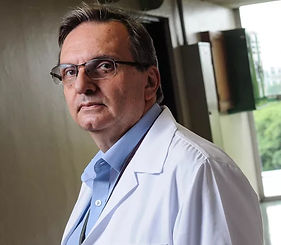
Marco Antonio Stephano, DVM, MSc, PhD
Professor in the Department of Biochemical and Pharmaceutical Technology at the School of Pharmaceutical Sciences, University of São Paulo (USP). He holds a Master's degree in Pharmacology from the University of Campinas (UNICAMP) and a PhD in Biochemical and Pharmaceutical Technology from the University of São Paulo (USP).
Professor at the School of Pharmaceutical Sciences of the University of São Paulo (USP), researcher, and specialist in immunobiologicals, Marco Antonio Stephano has built an extensive career dedicated to the development of sera, vaccines, and biopharmaceuticals.
He served as a researcher at the Butantan Institute for two decades, where he worked on technological development and quality assurance of biological products. He is currently Head of the Laboratory of Immunobiologicals and Biopharmaceuticals at USP and is a member of important national and international scientific organizations, including the National Academy of Pharmacy and the National Council for the Control of Animal Experimentation (CONCEA).
Recognized for his contributions to innovation in healthcare, he conducts research focused on biotechnology, immunization, and the promotion of healthy aging through evidence-based preventive strategies.


back to CO-AUTHORS
About Marco Antonio Stephano, DVM, MSc, PhD
Marco Antonio Stephano earned his degree in Veterinary Medicine from the Federal Rural University of Rio de Janeiro (1985), a Master's degree in Pharmacology from the University of Campinas – UNICAMP (2000), and a PhD in Biochemical and Pharmaceutical Technology from the University of São Paulo – USP (2005).
He served as Scientific Researcher V at the Butantan Institute from 1987 to 2007, where he developed important technological innovations related to the production of sera and vaccines. From 2003 to 2007, he held the position of Director of Quality Assurance at the institution.
Since April 2007, he has been a Professor in the Department of Biochemical and Pharmaceutical Technology at the School of Pharmaceutical Sciences, University of São Paulo (USP). His academic and scientific career has been distinguished by research in the fields of immunobiologicals and biotechnology, with emphasis on the following areas: Development of processes for the production of sera and vaccines; Validation of biotechnological processes and quality control of biological products; Studies on adjuvants and delivery systems for vaccines and antigens intended for serum production; Cell culture applied to viral vaccine production and cytotoxicity testing and Cell-free recombinant protein synthesis.
At the School of Pharmaceutical Sciences at USP, he serves as Head of the Laboratory of Immunobiologicals and Biopharmaceuticals and teaches in both undergraduate and graduate programs.
In 2008, he became an ad hoc advisor to the São Paulo Research Foundation (FAPESP). The following year, he joined the Technical Committee on Biological Products of the Brazilian Pharmacopoeia, linked to the Brazilian Health Regulatory Agency (ANVISA).
Between 2012 and 2013, he served as a member of the Committee Board on Global Health of the Institute of Medicine at the National Academy of Sciences in Washington, D.C., contributing to international discussions on global health.
Since February 2013, he has held Chair No. 17 of the National Academy of Pharmacy. In July 2014, he became a full member of the National Council for the Control of Animal Experimentation (CONCEA), affiliated with the National Council for Scientific and Technological Development (CNPq).
In 2016, he was awarded the CNPq Productivity Fellowship in Technological Development and Innovative Extension (DT), a distinction granted to researchers with outstanding contributions to the scientific and technological advancement of Brazil.
Chapter Theme
VACCINES FOR OLDER ADULTS: IMPACT ON LONGEVITY AND QUALITY OF LIFE
Co-authored with Dr. Lauro Domingos Moretto, Dr. Nelson de Franco Jr., and Prof. Dr. Marco Antonio Stephano.
In this chapter, Prof. Dr.Marco Antonio Stephano, together with his co-authors Dr. Lauro Domingos Moretto and Dr. Nelson de Franco Jr., presents a science-based reflection on the role of vaccination as one of the pillars of healthy aging. In a context marked by increasing life expectancy and the challenges posed by immunosenescence—the natural decline of the immune system associated with aging—the authors demonstrate that prevention through vaccination goes far beyond protection against infectious diseases.
Drawing on up-to-date scientific evidence, the chapter reveals how immunization contributes to preserving autonomy, functional capacity, and quality of life among older adults by reducing hospitalizations, severe complications, and the losses associated with frailty. More than simply adding years to life, vaccination is presented as a strategy to ensure independence, dignity, and well-being throughout the aging process.
By integrating public health, scientific innovation, and preventive care, this chapter invites readers to understand that a happy and fulfilling longevity is also built through conscious choices that protect life and make it possible to live longer—and better.